
Financial institutions voiced their support for forest risk commodity regulations at an event in Parliament this week, telling MPs and Lords that deforestation poses a material risk to the UK financial system and the need for public policy to help them achieve deforestation-free portfolios.
The UK government spearheaded the Glasgow Leaders’ Declaration for Forests and Land Use at COP26, which commits more than 140 countries to halting and reversing global deforestation by 2030, including through the “realignment of financial flows”.
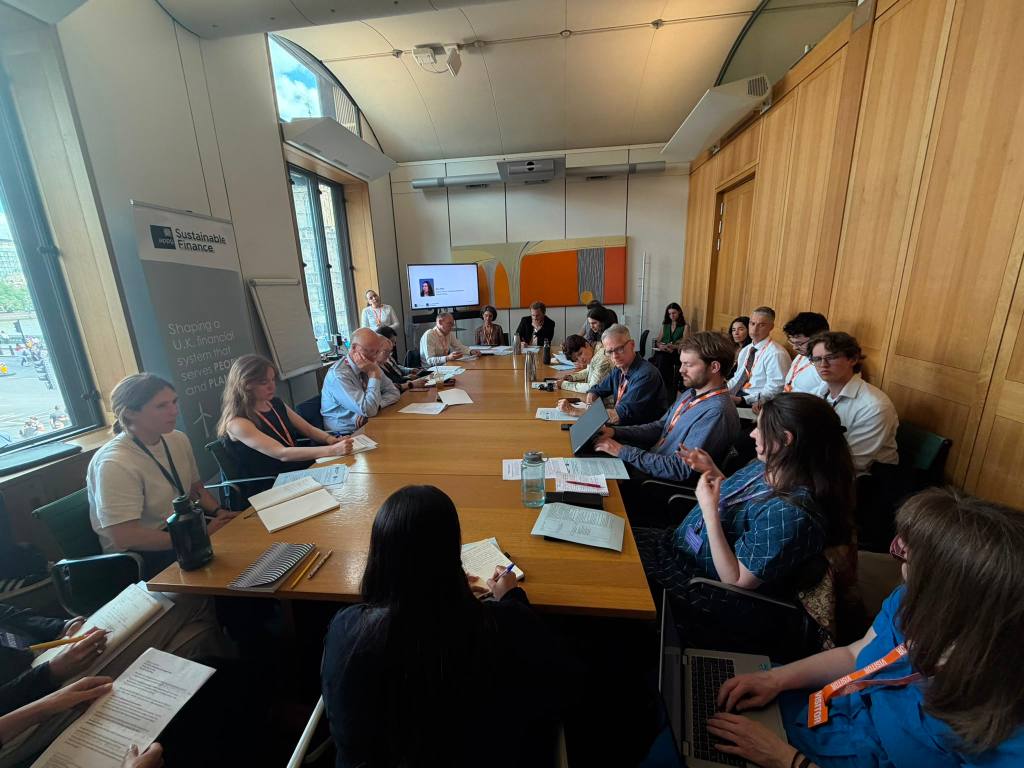
The roundtable “What now for UK deforestation regulation?” was organised jointly by the All-Party Parliamentary Group (APPG) on Global Deforestation and the APPG on Sustainable Finance, with cross-party representation from Lord Grayling, Alex Sobel MP, Kerry McCarthy MP, Tristan Osborne MP, and aides to Toby Perkins MP and Sarah Champion MP in attendance.
UK progress on ending the import of deforestation-linked goods
At the event, civil society organisations, parliamentarians, civil servants and investors welcomed the UK government’s 23 June announcement that the EU’s Deforestation Regulation (EUDR) will apply in Northern Ireland.
The government also confirmed it will shortly launch a consultation on bringing Schedule 17 of the Environment Act 2021 into force in Great Britain. New Global Witness analysis estimates that, during the nearly five-year delay to introducing these regulations, the UK’s direct imports alone have been linked to forest loss covering an area the size of Leeds.
The consultation will propose aligning the UK’s law with the EUDR by covering the same forest-risk commodities and requiring businesses with annual turnover above £1 million to carry out due diligence to ensure commodities were produced in line with local laws.
This would mean the commodities covered in the UK would be cattle, cocoa, coffee, palm oil, rubber, soy and certain derived products like chocolate and furniture. Wood will continue to be covered by the UK Timber Regulation.
Once introduced, the proposed UK approach would ban products linked to illegal deforestation from entering the UK market. However, this would still fall short of the EUDR as applied in Northern Ireland in the immediate, which requires products to be legally produced and deforestation-free, regardless of whether forest clearance was legal under local law.
The government has said it intends to move Great Britain towards the EU’s higher deforestation-free standard over time, to protect the UK internal market and support exports.
At the event, one investor welcomed the announcement and stressed that strong regulation of the real economy is essential, but urged the government to adopt the EU’s deforestation-free standard as quickly as possible. Another investor group representing trillions in assets under management noted the UK government has an opportunity to be a world leader by retaining leather in scope of its law (which is likely to be removed from the EU’s approach due to industry lobbying).
Alex Sobel MP also highlighted that businesses in the UK Cocoa Coalition, launched at an earlier meeting of the APPG on Global Deforestation, have also publicly called for full alignment with the EUDR.
The UK must also end the financing of deforestation
Progress on Schedule 17 of the Environment Act also opens the door to a long-overdue Treasury review of the UK’s role in deforestation finance, agreed in 2023.
Financial institutions at the event said they recognised the threat posed by deforestation to the UK economy and said that there are significant limitations to what voluntary investment levers could achieve alone without regulatory action.
Participants heard that nature loss is as dangerous as climate change and could cause a 12% loss to the UK GDP. Deforestation poses a transition risk, a reputational risk, a systemic risk and a national security risk. A Defra national security assessment report earlier this year identified global ecosystem collapse and biodiversity loss as a high risk to national security, and four out of six of the ecosystems identified as critical for the UK are forests.
Lords and MPs also heard that while some investors have joined voluntary initiatives over the years calling for an end to deforestation, including those launched at COP26 such as the Financial Sector Deforestation Action group, their portfolios are not deforestation free.
Investors speaking at the event noted that regulation is the single most important lever needed for a deforestation-free financial system. They particularly welcomed the sequencing of real economy regulation first as a pathway needed to support financial action.
“We think that policy certainty is the cheapest form of investment stimulus for traceable deforestation-free commodities, so we’re delighted with the recent announcement.”
Chris Dodwell, global head of policy and advocacy at Impax Asset Management speaking ahead of the event.
Speakers from Global Witness and Mighty Earth set out the facts on the UK’s financing of deforestation: More than £300 billion of UK pension savings is assessed as being invested in companies and financial institutions with a high risk of driving deforestation. UK institutions earned $1.2 billion from just 50 companies accused of deforestation since the Paris Agreement. It is estimated that for every £10 the average Briton puts into their pension, £2 is invested in businesses with high deforestation risk.
Mighty Earth also provided an update on their complaint to the Financial Conduct Authority, which alleges market misconduct by Barclays in underwriting $3 billion of JBS’s “fraudulent” Sustainability-Lined Bonds (SLBs). Barclays made $1.7 billion from financing the world’s largest meat company JBS, while it was shown to be buying cattle from suppliers illegally invading the Parakanã’s Indigenous lands in the Amazon.
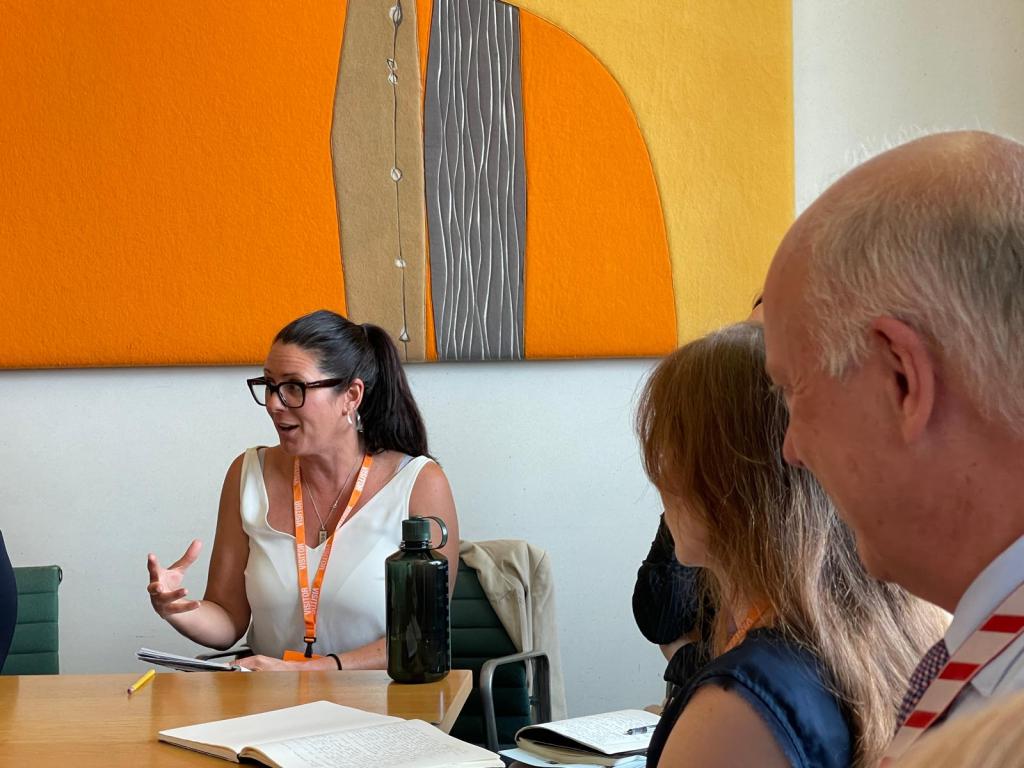
Multiple voices in the room spoke to the inadequacy of voluntary standards and agreed that data on deforestation is available to help financial institutions execute due diligence, but data without the duty to use it does not lead to change.
There are two challenges the UK must focus on: cutting off the financial flows to deforesting companies; and financing the protection of standing forests. Currently for every dollar invested in nature positive solutions, thirty dollars are spent on activities that have a direct negative impact on nature according to the UN Environment Program and Global Canopy. Ongoing reviews of performance against the Global Biodiversity Framework are expected to show little progress towards aligning financial flows with nature-positive outcomes.
In the face of this challenge, a whole-of-government approach to valuing nature was called for, in line with Dasgupta Review’s recommendations: one that uses all levers to shift the money away from nature-negative activities and towards nature-positive activities.
Participants noted the UK government’s ambition to be a leading global provider of high-integrity “transition finance” and that a UK regulatory approach should not just lead to derisking.
Global Witness argued that implementing this “transition finance” vision requires financial institutions to adopt a due diligence approach to ensure they are not financing deforestation, and that there is transparency where a company with a track record of deforestation receives funding on the measures taken to ensure it does not lead to forest loss and linked human rights abuses.
Recommendations
The APPG Global Deforestation and the APPG Sustainable Finance produced a joint position paper calling for the government to publish a timeline for its publication of forest risk commodity regulations; to immediately commence the Treasury Review of the adequacy of UK financial regulation in eliminating the financing of prohibited forest risk commodities, according to Section 79 of the Financial Services and Markets Act 2023; and to introduce legislation on mandatory due diligence on deforestation for financial institutions.
The APPG Global Deforestation is a cross-party forum for exchanging information and raising awareness of global deforestation. The APPG Global Deforestation is co-chaired by Alex Sobel MP and Pippa Heylings MP, and the secretariat is provided by the NGO Forest Coalition.

