
Indigenous leaders have called on the UK to ensure the protection and recognition of Indigenous Peoples and Local Communities’ (IPs and LCs) land and territories, to guarantee funding goes directly to them, to stop its focus on the carbon credit market and to push for ambitious legislation under the Environment Act. The delegation from Brazil, Indonesia and Malaysia made their key demands during meetings in Parliament with the APPG on Global Deforestation and with civil servants.
Protection and recognition for Indigenous Peoples and Local Communities

“Our territories are being destroyed. Droughts, mercury poisoning, dead fish. We need resources to defend and control our land. We need support for education, healthcare, clean water.”
Alessandra Munduruku, an Indigenous leader of the Munduruku people
For generations Indigenous Peoples have been the best guardians of our forests and today act as stewards for around one third of the world’s land. In their 2023 Synthesis report, the IPCC highlighted the importance of Indigenous and local knowledge for climate solutions and said their co-operation and involvement was “integral to successful adaptation and mitigation across forests and other ecosystems.” But the delegation told MPs, they are under attack.
Celine Lim is from Sarawak on the island of Borneo and is also the Managing Director of SAVE Rivers, a civil society organisation that advocates for Indigenous People’s rights and environmental issues in Malaysia.
“Indigenous Peoples are sidelined in national laws. Their forests are not recognised as their own. National laws are not enough. The British have a close relationship with Malaysia, and they should leverage this, they should leverage trade to put in place safeguards for Indigenous rights.”
Dinamam Tuxá is an Indigenous leader of the Tuxá people, Executive Coordinator of the Articulation of Indigenous Peoples of Brazil (APIB) and Co-chair of the Global Alliance of Territorial Communities (GATC). He highlighted upcoming COP30 as a place for action.
“We are being excluded from COP30 negotiations, but it is our land that has been affected. There needs to be a territorial pledge at COP for the legal recognition of Indigenous land, to ensure the recognition of territories. There are currently laws being passed in Brazil that are highly problematic. They criminalise us when we defend our land. They allow companies to pollute our land. They paralyse the demarcation process.”
Direct funding for Indigenous Peoples

“You say you are ambitious. We see very worrying aid cuts. How will you carry your ambitions despite these aid cuts?”
Celine Lim, Managing Director SAVE Rivers
At COP29 in Baku the UK government promised to fulfil its pledge to provide £163 million to the Indigenous Peoples and Local Communities Forest Tenure Pledge by 2025. While welcoming this commitment, not enough of this money is directly reaching IP and LC groups. “We need funding coming directly to us for demarcation. We did not get access to any of the resources in the IPLC Pledge.” Dinamam Tuxá, told MPs.
Celine Lim demanded the UK use its close ties with the Malaysian government to guarantee more funding for community led initiatives – direct funding from the UK to Indigenous land projects.
Concerns over carbon credits
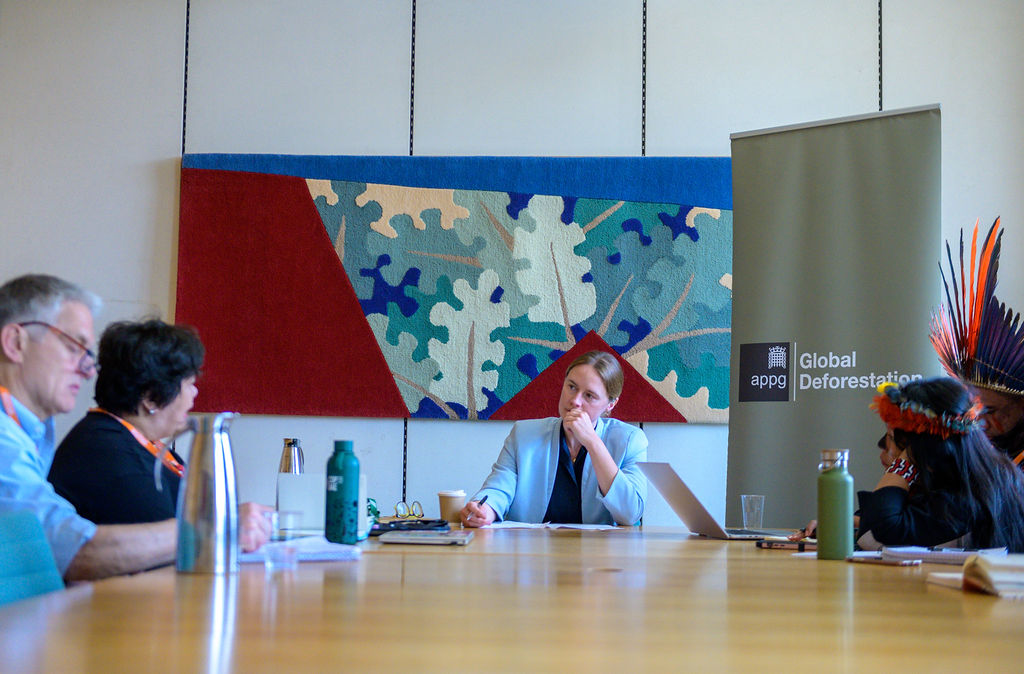
“We do not support carbon credits. It is the same companies who destroyed our forests who are now coming to buy credits. There is no consultation. Credits are false solutions. They justify land grabs.”
Celine Lim, Managing Director SAVE Rivers
The delegation also raised serious concerns about the UK’s focus on carbon credits. These allow an organisation to emit a set amount of carbon in return for investment in projects like reducing deforestation. But many of these projects are mired in controversy over their environmental integrity and human rights concerns.
Last month the UK government announced plans to strengthen voluntary carbon and nature markets, promising better support for businesses and organisations to trade in carbon credits. But the delegation was clear:
“The UK cannot and should not focus on carbon credits. Funding needs to go to communities, and this will not happen through credits. We do not support UK work to advance the carbon credit market, high integrity or not.”
Ambitious legislation under the Environment Act
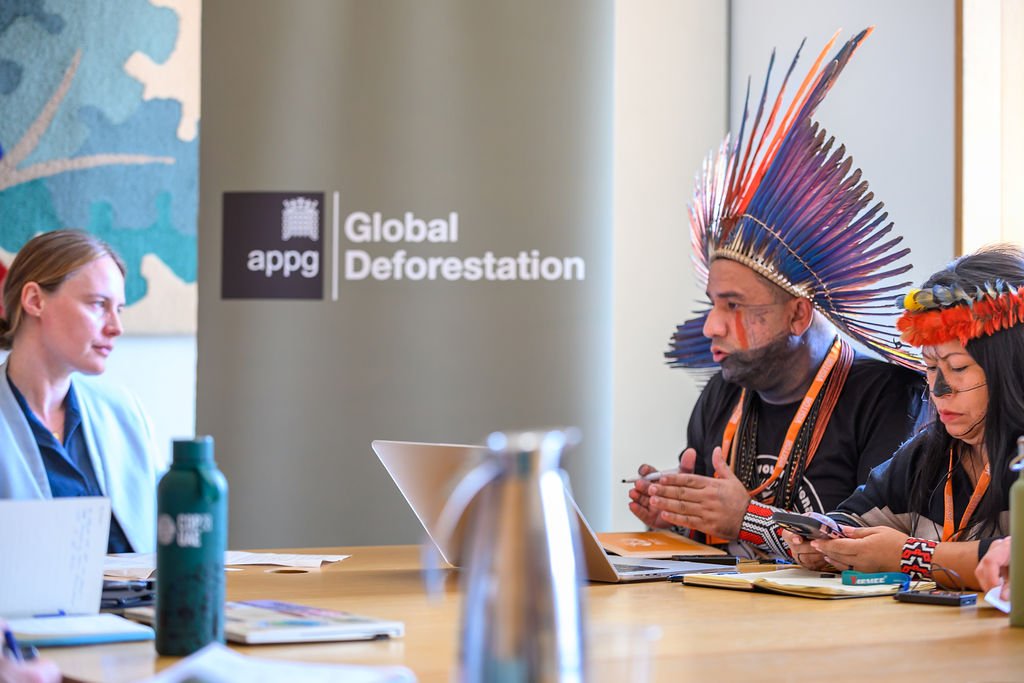
“Another thing we want to push while we’re here is the importance of the UK’s deforestation law. We’re pushing for that to be more ambitious. We want it to include more biomes, because it’s not just the Amazon and forests that are being affected. We also want it to include more products, more commodities, including minerals.”
Dinamam Tuxá, an Indigenous leader of the Tuxá people
Four years ago the Environment Act promised UK legislation to halt illegal deforestation. But Schedule 17, the implementing legislation necessary to make that happen has yet to be brought before Parliament.
The delegation asked that it be more ambitious than the EU Deforestation Regulation. Most notably, Tuxá raised that it should cover critical minerals and gold, and account for biomes like the Cerrado in Brazil. He also stressed that the Regulation should include all deforestation, not just illegal deforestation. He stressed this would allow Indigenous People to identify companies who are committing crimes and invading their territories, and allow us to try them for those crimes.
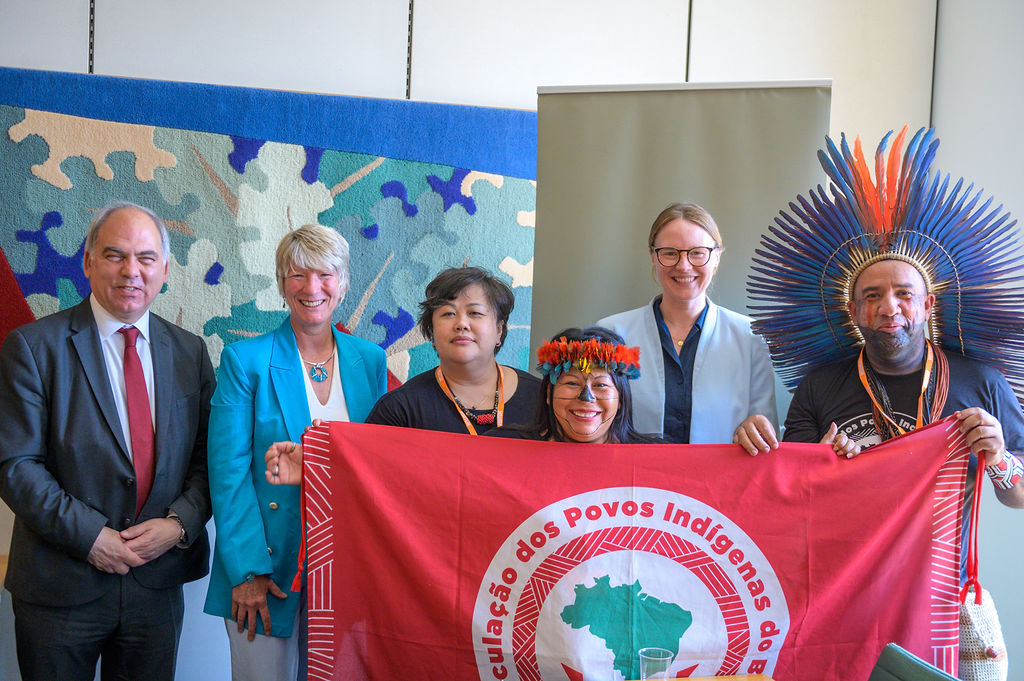
MPs in attendance included the co-chairs of the All Party Parliamentary Group on Global Deforestation Anna Gelderd and Pippa Heylings, as well as Bambos Charalambous and David Taylor.
 NGO Forest Coalition